Professional Hail Damage Repair in Colorado Springs, CO
Hail dents don’t have to turn into a permanent eyesore. We restore panels with a paint-safe approach whenever possible, keeping your vehicle looking original again.
Hail Repair Results You Can See
What Is HDR? Does It Actually Work?
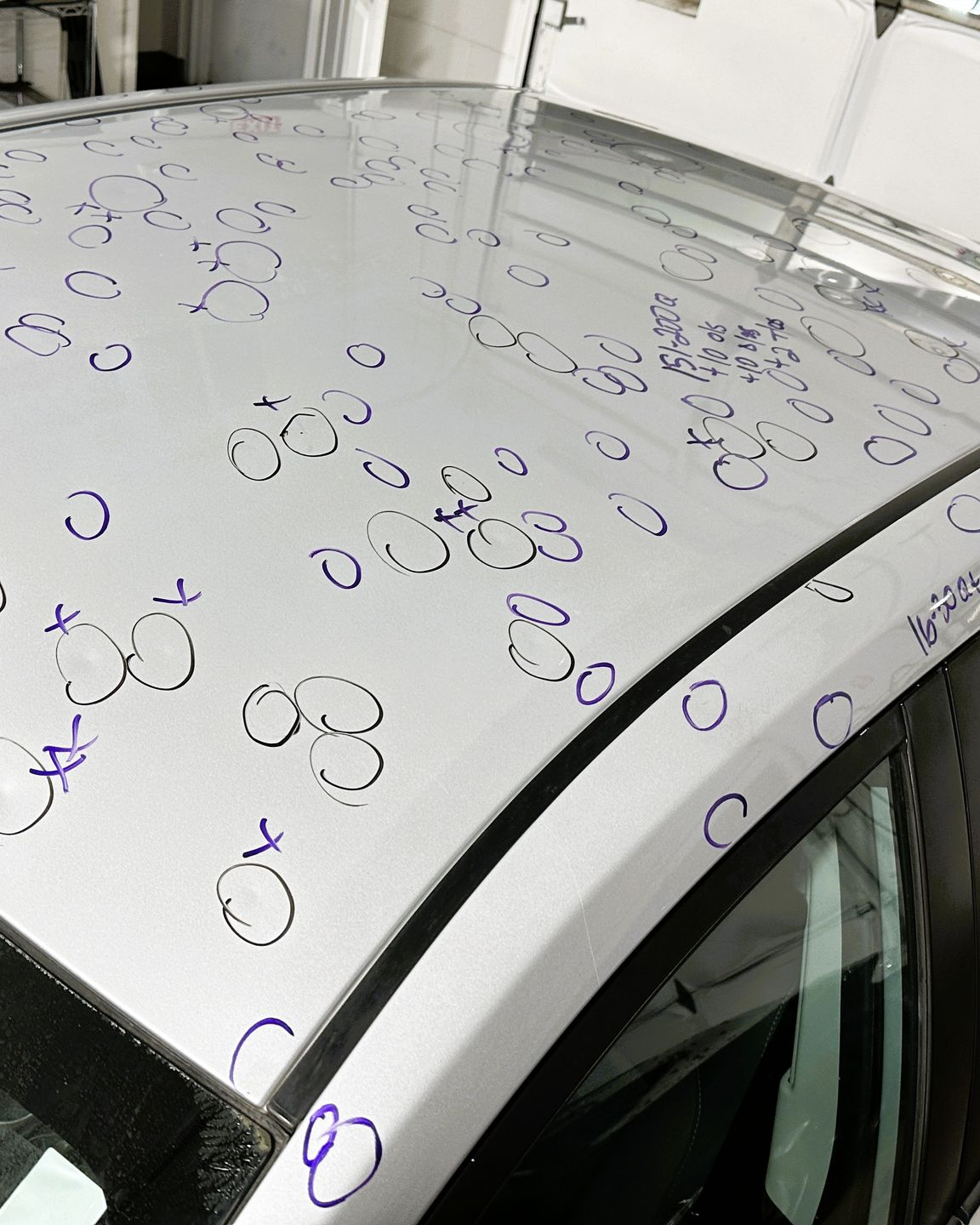
After a hail storm, the small dents might seem negligible until you catch them in the right light. Hood, roof, and trunk panels can take dozens of hits, and once the light starts reflecting off them, it’s all you can see. Hail Damage Repair focuses on restoring those panels back to clean, smooth contours, without turning the job into a full repaint unless the damage truly calls for it.
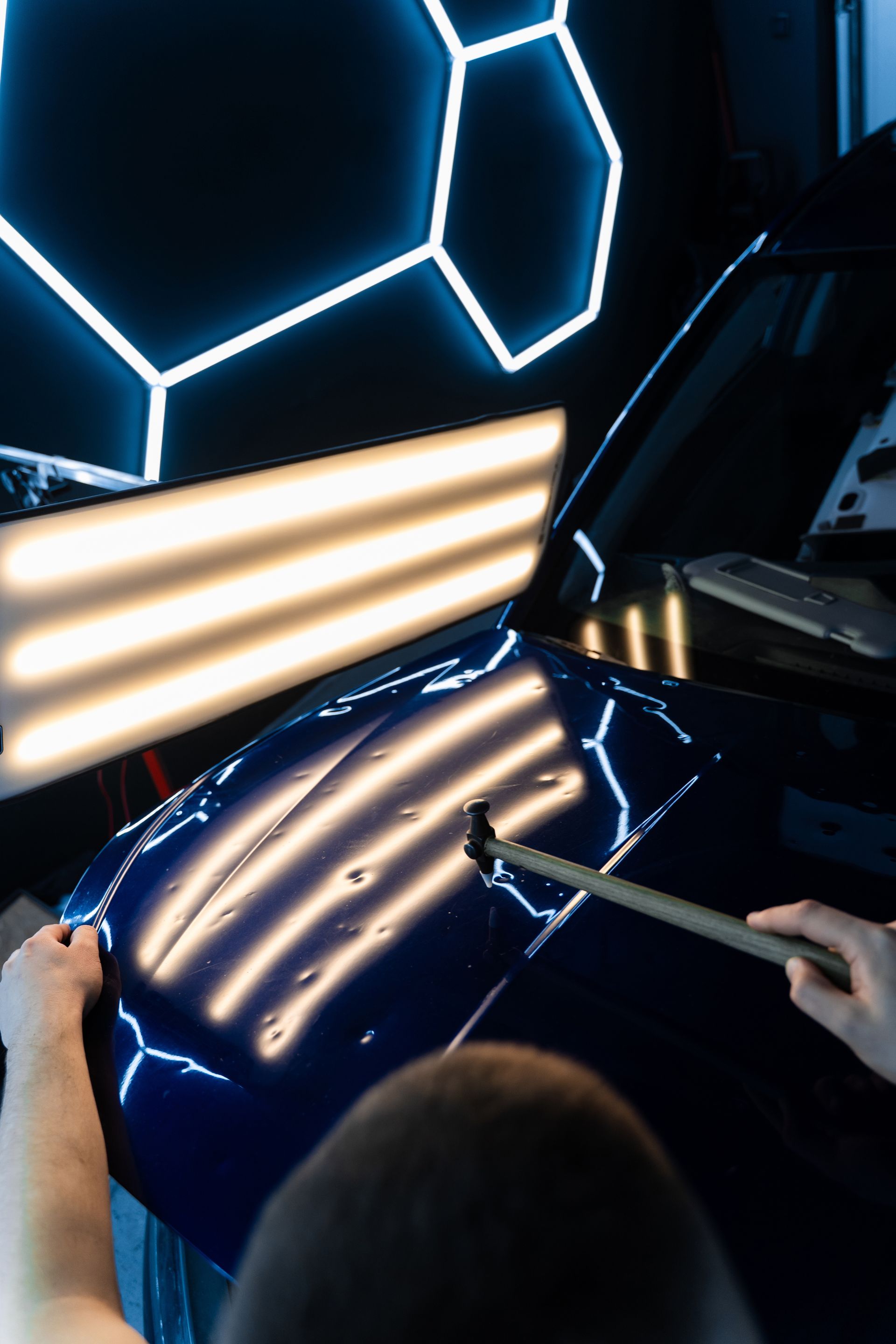
In many cases, paintless dent repair is the best solution. It allows us to massage the metal back into shape from behind the panel while keeping your factory paint intact. When dents are too sharp, paint is cracked, or panels are heavily stretched, traditional repair may make more sense. Either way, the first step is a straightforward assessment. We’ll tell you what’s repairable, what isn’t, and what the cleanest path forward looks like for your vehicle.
How Hail Damage Repair Works
Our Process for Repairing Hail Damage on Cars
Hail damage isn’t one-size-fits-all, and neither is the repair. We start by inspecting your vehicle under proper lighting, then recommend the repair path that makes sense based on dent depth, panel access, and paint condition. You’ll get a clear explanation of what qualifies for paintless repair, what requires a traditional approach, and what parts may need to be replaced.
Paintless Dent Repair (PDR) for Hail Dents
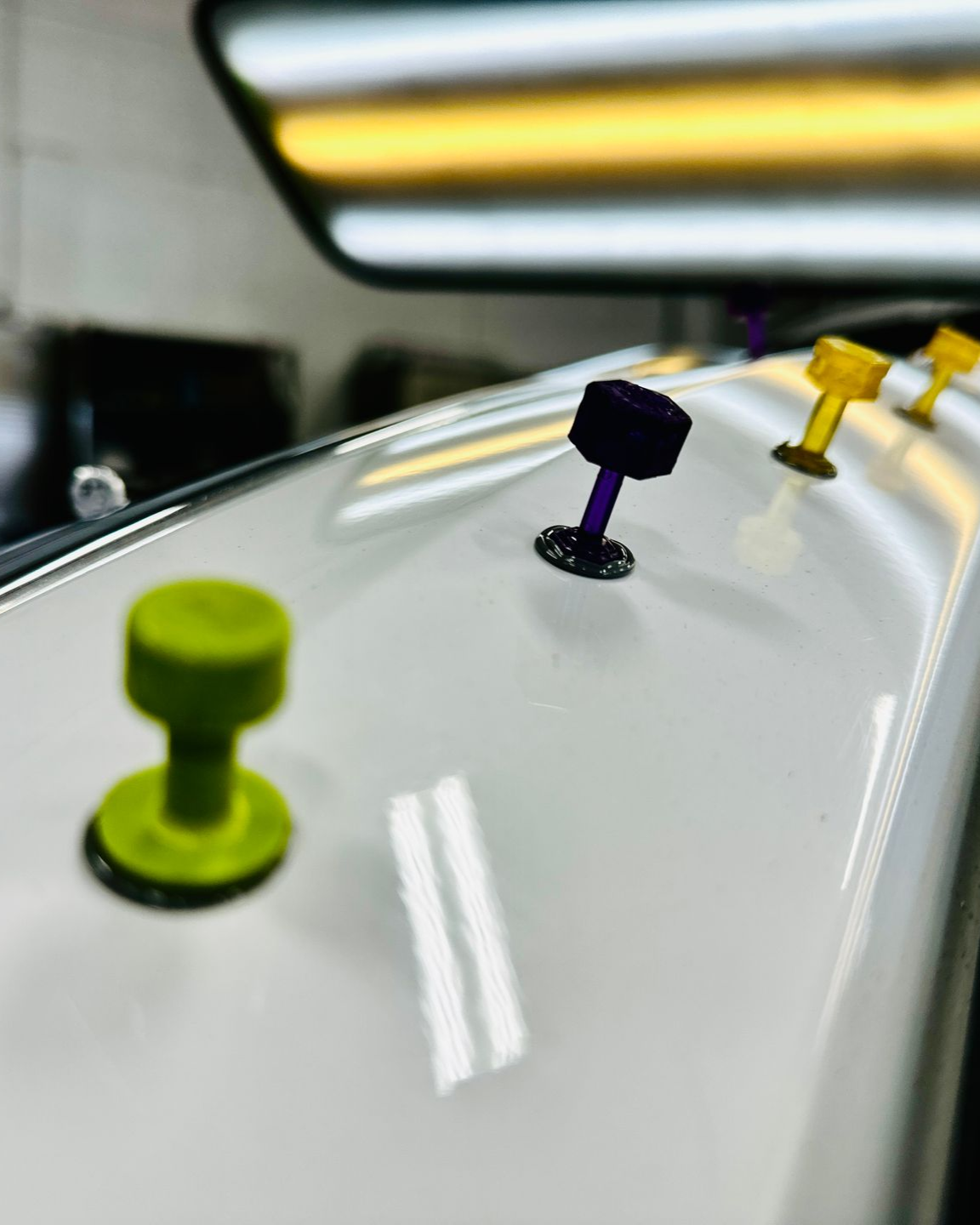
When the paint is intact and the dents are repairable, PDR is the cleanest option. We typically access the backside of the panel and massage the metal back into its original contour without sanding, filler, or repainting. This method preserves factory paint, reduces downtime, and restores smooth reflections across the hood, roof, trunk, and other impacted panels. PDR is often the preferred approach after a storm because it fixes the dents without changing the vehicle’s original finish.
Traditional Repair for Severe or Compromised Areas
Some hail hits push past what PDR can restore cleanly. Oversized dents, heavily stretched metal, and areas with cracked paint may need traditional repair methods. It can involve leveling the surface, prepping the panel, and refinishing so the area looks correct again. If your vehicle has a mix of repairable dents and a few severe spots, we’ll walk you through a blended plan so you understand where traditional work is necessary and why.
Glass Repair When Impacts Reach the Windshield
Hail can crack or chip glass, especially on windshields and back windows. If we spot glass damage during inspection, we’ll explain what needs to be repaired so you don’t leave with a compromised seal, reduced visibility, or a crack that spreads with temperature swings and vibration.
Why You Need It?
Repair Your Hail Damage Before It’s Too Late
Hail Dents and Why Early Repair Matters
Hail damage is primarily cosmetic, but if the impact is severe enough to crack or weaken the paint surface, the exposed areas can become vulnerable to moisture and environmental elements over time. In those cases, corrosion may eventually develop. Addressing hail damage early helps ensure any compromised areas are repaired promptly and prevents potential long-term paint or surface issues from developing.
Protect Resale and Trade-In Value
Hail dents are one of the fastest ways to lose value on a vehicle that otherwise runs perfectly. Dealerships and buyers see hail damage as a future cost and uncertainty, even when it’s only small dents. Repairing the panels restores the appearance and helps protect the value you’d otherwise leave on the table when it’s time to sell or trade.
Keep the Vehicle Looking Right in Real Light
Hail damage is actually harder to see in direct sunlight. It does show up under the right lighting. Direct sun on a light colored car will not allow for dents to be seen correctly.
Once you notice it, it becomes hard to unsee. Repair restores clean reflections across the hood, roof, and trunk, bringing the vehicle back to the crisp, smooth look it had before the storm.
Preserve Factory Paint When Possible
When the paint is intact, paintless repair allows you to restore the panel without repainting. That matters because factory paint is difficult to match perfectly once it’s disturbed. Keeping the original finish reduces the chance of mismatched color, blend lines, or texture differences later.
FAQ
Hail Damage Repair Questions and Answers
How do you determine whether hail damage qualifies for paintless dent repair?
We inspect dent depth, location, and metal stretch, then confirm the paint is still intact. When the damage fits the criteria, we recommend PDR because it restores the panel without repainting.
What types of panels usually take the most hail damage?
Hoods, roofs, trunk lids, and the tops of fenders tend to show the most hits because they take impacts directly. We inspect every panel, including pillars and upper doors when needed, so we don’t miss hidden damage.
How long does hail damage repair take?
The biggest factors for how long a repair takes isn't the repair process. The biggest factors are how quickly the client's insurance company is able to approve the repair and if parts need to be replaced, how quickly we can get the parts. Sometimes there is a back order on parts due to the extent of the number of cars damaged by the hail storm.
Will the dents completely disappear after repair?
The goal is a clean, smooth panel that reads correctly in direct light. Results depend on severity, dent sharpness, and whether the metal or paint was compromised.
What if the hail damage includes cracked glass?
We’ll point out any glass damage during inspection and help you understand what needs attention. Hail repair often focuses on dent removal, but cracked glass still needs to be addressed to keep the vehicle safe and restored to it's pre-loss condition.
When does traditional body repair make more sense than PDR?
If the dents are extremely large, the paint is cracked, or the panel is stretched beyond what PDR can restore cleanly, traditional repair becomes the better option.